Integrating the "Don't Disturb I'm Gaming" Digital Artwork Into Your Creative Workflow
In the world of digital creation, from personalized merchandise to home decor, the efficiency of your workflow hinges on the quality and versatility of your source assets. The "Don't Disturb I'm Gaming" digital artwork bundle represents more than just a fun phrase; it is a ready-made component designed to seamlessly integrate into your projects. This collection of files – SVG, DXF, EPS, PNG, and JPEG – is engineered for immediate application within popular cutting software like Cricut Design Space and Silhouette Studio. For professionals, hobbyists, and small business owners, acquiring such a bundle is often a pivotal step in the execution phase of a project, bridging the gap between concept and physical output.
The Role of Pre-Made Artwork in Project Planning and Execution
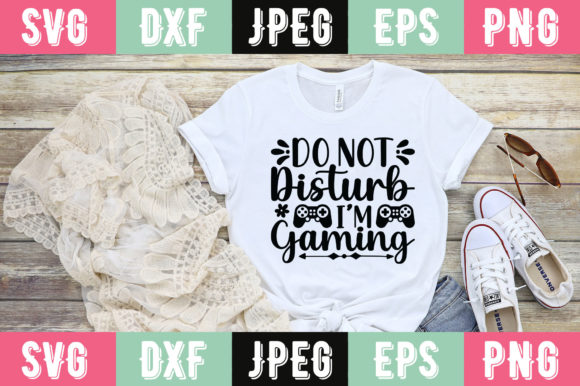
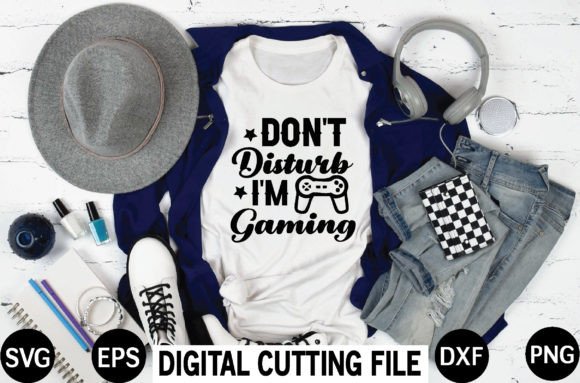
Effective project management, even for creative tasks, involves identifying and sourcing the right elements before production begins. The "Don't Disturb I'm Gaming" package fits into this preparatory stage. By providing vector files (SVG, EPS, DXF) alongside high-resolution raster images (PNG, JPEG), it offers flexibility. During your initial planning, you can assess the design's suitability for your intended application—be it a t-shirt, a mug, a laptop decal, or a wall poster. The mockup JPEG file serves as a valuable tool for visualization, allowing you to present concepts to clients or collaborators early in the process without needing to perform a physical cut or print first. This can streamline decision-making and ensure alignment before moving to the more resource-intensive execution phase.
File Compatibility and Workflow Integration
The practical value of this digital artwork lies in its deliberate compatibility. Each file format serves a specific purpose within the broader ecosystem of design and manufacturing tools.
- The SVG File is the cornerstone for Cricut Design Space users. As a scalable vector, it ensures clean, precise cuts regardless of the final size. Integrating it is straightforward: upload the file to your Design Space canvas, where you can then manipulate colors, resize, and combine it with other elements before sending the design to your machine.
- The DXF File caters directly to users of Silhouette Studio. This format maintains the cut paths for silhouette machines, enabling a smooth import process. For creators who use multiple platforms, having both SVG and DXF eliminates format conversion steps, saving time and preserving design integrity.
- The EPS Vector File offers broader professional compatibility. If your workflow involves more advanced graphic design software like Adobe Illustrator for further modification before moving to cutting software, the EPS file serves as an ideal, editable foundation. This supports a layered workflow where a base asset can be customized to match a specific brand or theme.
- The PNG File with a Transparent Background at 300 DPI is a versatile asset for digital use. Beyond cutting machines, it can be directly used in digital presentations, online mockups, or even for simple printing where a cut contour isn't needed. Its integration into workflows is often as simple as a drag-and-drop into a digital layout.
This multi-format approach addresses a common friction point in creative workflows: asset readiness. By providing the key formats used across major platforms, the bundle ensures that the "Don't Disturb I'm Gaming" design can move from your download folder to your active project with minimal intermediary steps.
Practical Implementation in Common Scenarios
Understanding how to leverage this artwork requires looking at specific use cases. For a small business owner running an online store for gaming merchandise, the bundle accelerates production. Upon downloading the ZIP folder, the organization of files is crucial. A recommended practice is to immediately extract and catalog the files within your project management or asset library system. This might involve storing them in a dedicated "Gaming Themes" folder with clear naming conventions.
For a specific project, such as creating a series of themed laptop skins, your workflow might look like this:
- Use the PNG mockup to create a quick visual for your website or social media preview.
- Open the EPS file in Illustrator to adjust the color scheme to match a new product line, perhaps changing accent colors.
- Save your modified design as a new SVG.
- Upload this custom SVG into Cricut Design Space to finalize the cut layout, perhaps duplicating the design to fill a material sheet efficiently.
- Send the design to your cutter and proceed to application.
This process showcases how the initial artwork interacts with other tools (graphic software, cutting software, your cutter) and decisions (color customization, layout optimization). The quality of the source files, particularly the vector formats, ensures that modifications do not degrade the design's sharpness, supporting consistent quality control across batches.
Long-Term Utility and Asset Management
Digital assets like the "Don't Disturb I'm Gaming" bundle are not typically single-use items. Their long-term value depends on how they are integrated into your ongoing creative system. Educators creating classroom rewards, bloggers producing branded gifts, or freelancers offering add-on services for clients can reuse this asset across multiple projects over time. To maximize this, consider the artwork as part of a larger digital library. Tag it with relevant keywords like "gamer," "fun," "door sign," or "no disturbance" within your asset management tool. This way, when planning a future project that requires a lighthearted, gaming-focused element, you can quickly locate and deploy it, enhancing your overall efficiency.
Furthermore, the universal compatibility mentioned – readiness for use with all major electronic cutting machines – future-proofs the asset. As your workshop tools evolve or you switch between Cricut and Silhouette platforms, the same core ZIP folder remains functional. This reduces dependency on a single software ecosystem and provides flexibility in your operational planning.
Optimizing the Workflow From Download to Finished Product
The instant download nature of the product emphasizes speed, but the real efficiency gains come from your handling of the files. A key tip is to verify file integrity immediately after download. Open each file in its intended software to confirm it loads correctly and the layers or cut paths are defined as expected. This simple quality check prevents disruptions later during a time-sensitive production run.
When integrating the design into a complex project, such as a multi-element sign that combines "Don't Disturb I'm Gaming" with other graphics, use the software's grouping and layering functions. In Silhouette Studio or Design Space, you can import the SVG/DXF and then import other assets, arranging them on a single mat. This approach leverages the artwork as a modular component, promoting consistency when you use it repeatedly alongside other elements from your library.
For entrepreneurs and marketers, the transparent PNG file is particularly useful for creating digital content. It can be superimposed onto website banners, email graphics, or social media posts to promote a gaming-related sale or event. This extends the utility of the artwork beyond physical crafting into digital marketing workflows, offering a cohesive visual theme across both tangible products and online campaigns.
Ultimately, the "Don't Disturb I'm Gaming" digital artwork bundle is a practical resource that fits into the execution stage of a wide array of projects. Its value is unlocked not just by the download, but by its thoughtful incorporation into your established processes—from asset management and software interoperability to final production and reuse. By treating it as a versatile, high-quality component rather than a standalone graphic, you can streamline your creative workflow, maintain output quality, and adapt quickly to new project requirements.