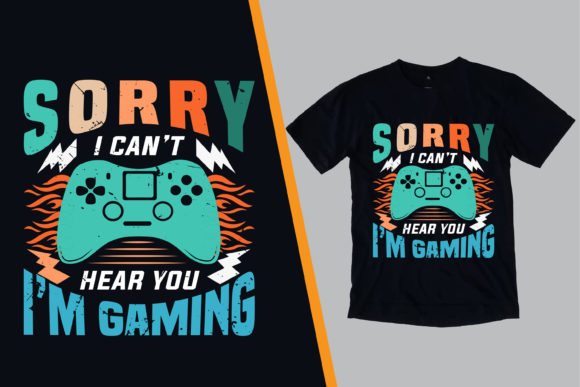
Sorry I Cant Hear You I Am Gaming Tshirt: The Digital Asset for Creative Projects
In the realm of digital creativity and merchandise creation, design files are the foundational components. The "Sorry I Cant Hear You I Am Gaming Tshirt" concept represents a specific type of digital asset – a pre-made, thematic design intended for physical product application. This isn't just a witty phrase; it's a ready-to-use graphic element that fits into a broader workflow for creators, entrepreneurs, and hobbyists. Understanding its role and integration into your process is key to efficiently producing personalized items.
Integrating Design Files into Your Production Workflow
The practical journey begins not with the printing, but with the acquisition and preparation of the digital file itself. When you receive the AI and EPS files for the "Sorry I Cant Hear You I Am Gaming Tshirt" design, you are receiving vector artwork. This format is crucial for professional output. Vector files, unlike standard images, are built from mathematical paths. This means they can be scaled infinitely without any loss of quality, ensuring crisp lines on a small mug or a large hoodie. This characteristic directly impacts the quality control and consistency of your final products.
Preparation and Platform Compatibility
Before initiating any production, you must ensure compatibility with your tools. AI and EPS files are typically opened in professional graphic software like Adobe Illustrator or compatible open-source alternatives. This step involves verifying the file's integrity, checking layer structures if applicable, and confirming color modes (like CMYK for professional printing). This preparatory check avoids mid-process disruptions. For those using automated cutting machines for vinyl or engraving, the file might need to be converted or paths optimized for that specific hardware, a simple step when starting from a clean vector source.
The Multifaceted Application Across Different Projects
The true value of such a design file lies in its versatile application. The "Sorry I Cant Hear You I Am Gaming Tshirt" design can be the central graphic for a multitude of projects, not just T-shirts. Your workflow branches out based on the end product.
- Apparel Production: This is the most direct path. The file is sent to a screen printing service, used for direct-to-garment (DTG) printing, or set up for an iron-on transfer. The process requires selecting garment type (T-shirt, hoodie, sweatshirt), color, and size. The vector file ensures the design prints sharply regardless of the garment's size.
- Promotional and Gift Items: Applying the design to mugs, bags, or stickers involves a different production method, such as heat transfer for mugs or vinyl cutting for decals. The same core file is adapted, often by simply placing it into a template provided by your printing service or cutting machine software.
- Crafting and Personal Projects: For scrapbooking or invitation design, the digital file is imported into layout software like Adobe InDesign or even PowerPoint. Here, it becomes a graphical element to be combined with text and other visuals, maintaining its sharp quality even when printed on cardstock.
Each application path interacts with different platforms, services, and physical materials. The consistent factor is the reusable, high-quality digital asset.
Organization and Long-Term Asset Management
For creators who handle multiple designs, organizing these files is a critical part of the workflow. Labeling your "Sorry I Cant Hear You I Am Gaming Tshirt" AI and EPS files clearly within a dedicated folder system—perhaps categorized by theme, occasion, or product type—enhances efficiency for future projects. When a similar need arises, such as a gaming-themed event or gift, you can quickly locate and redeploy the asset without recreating it.
Streamlining Execution for Business and Personal Use
The implementation differs slightly between a small business owner and a personal hobbyist, but the core process remains. A business owner integrating this into their merchandise line would follow a more formalized workflow: design acquisition, technical preparation, sourcing a reliable printer, quality sampling, inventory planning, and finally, listing the product for sale. The digital file sits at the very start of this chain, its quality influencing every subsequent step.
For a personal user making gifts for friends or family, the workflow is more condensed but still follows a logical sequence: selecting the design for the occasion (a "Special Day"), choosing the recipient's preferred product (e.g., a T-shirt for a gaming enthusiast), preparing the file for the chosen production method (perhaps a local print shop or DIY vinyl cutter), and executing the final production. In both scenarios, the design file removes the complex step of original illustration, allowing focus on execution and personalization.
Practical tip: When sending vector files to a third-party printer or service, always include a low-resolution JPG preview as a reference. This helps them quickly visualize the intended outcome alongside the technical vector file.
Observing Outcomes and Iterating on Use
After completing a project using the "Sorry I Cant Hear You I Am Gaming Tshirt" design, a useful practice is to note the outcomes. Was the color reproduction accurate? Did the scale work perfectly on the chosen product? How was the feedback from the end user or customer? These observations inform your future use of the same asset. Perhaps you learn that it works exceptionally well on dark garment colors, or that simplifying the design slightly makes it more effective for small engraving areas. This reflective step turns a single project into a learning point, improving your overall workflow for future digital asset integration.
The utility of such a focused digital file extends beyond a one-off task. It becomes a part of your creative resource library. Whether you are a blogger creating branded merchandise, a freelancer offering design-enhanced products, or simply someone who enjoys personalized crafting, having a reliable, high-quality graphic like this at your disposal simplifies planning and accelerates implementation. It allows you to bypass the initial creative design phase and move directly into the tangible production phase, where ideas become physical reality.
Final Considerations for Smooth Integration
To seamlessly integrate such digital files into your routine, maintain a standardized software environment for handling them. Keep your graphic software updated. Establish relationships with trusted production partners (printers, engravers) who understand how to work with vector files. And most importantly, align the design choice with the project's intent—the humorous, gaming-focused message of the "Sorry I Cant Hear You I Am Gaming Tshirt" design naturally fits casual apparel, gaming events, and light-hearted gifts, ensuring the final product resonates perfectly with its context.
By viewing this digital asset not as a static image but as a dynamic component in a production workflow, you unlock its full potential. From preparation through to application on diverse mediums, it supports a clear, efficient path from digital concept to physical item, serving professionals and hobbyists in achieving consistent, high-quality results for their specific occasions and goals.